Day Six – Navarette

We started in easy after our rest day in Logrono — about eight miles to Navarette, another hill town. Much of the first four miles was flat, and through parks on the outskirts of Logrono. Locals shared the paved trails with us [A digression — people in Spain walk around a lot, morning, noon and night (but not siesta). Around the cities and towns, there are almost as many of them as there are peregrinos. They are often people who appear to be possibly retired, or with flexible job schedules during the day; at night, it’s a wide variety of families, young people, older ones. Maybe only the people working in the bars and restaurants and stores are not out and about. Sometimes they have dogs, sometimes friends and families — grandma pushing the stroller, mom, dad, kid(s).]

A Camino story — we were standing near the entrance to the park early in the morning and looking at the map to find the Camino. An elderly man came over and started gesturing and talking. Finally he indicated that we should follow him, and we did, for six or eight blocks. Along the way he shook hands with a guy opening up his bar, said hello to a young guy walking along, greeted two or three old men. Finally, we got to a point where he gave us to understand that the way had been blocked by construction and he  had shown us around the detour. We thanked him profusely — and then he stopped an older couple going by, who he may or may not have known, and handed us off to them. So we followed them for several more blocks until they turned off, and we had clear yellow arrows to follow. This is slightly atypical for people to go so far out of their way, but most people we see say “Hola,” or “Buen Camino,” or “Buen Dia.” And people often leave their cash registers and walk us to the door or out into the street to physically show us the way to go. It’s such a contrast to the sense we get sometimes elsewhere, where tourists seem to be tolerated, but not at all welcomed.
We got a late start — 8:20, by the time we got coffee and started following the yellow arrows through Logrono. At 10:00 we were sitting at a cafe table on the patio overlooking a large reservoir in the extended park area,  with sun and a breeze to brighten the day. Up past the lake, we came across a crusty guy in his 50s with a big white beard seated in a small shelter with apples, a few Camino souvenirs (scallop shells, pebbles with a yellow arrow painted on), and a book in which to write down who was passing by. He stamped our credencials, and waved us on with “Buen Camino.” It’s much cooler today — than when we started out from Pamplona, 15 degrees in the early hours and not much more than low-70s now. Excellent walking weather.
Later — finishing this up quickly because we still have to get dinner which doesn’t start until 7:30 at the bar up the hill, and the owner of this hotel closes the wi-fi room at 9:00 p.m. Another Camino story — I marked my bag for the transport service from our pension in Logrono to the municipal albergue in Navarette. When we arrived in Navarette (and after a beer (Jim and Anthea) and a coffee (me), we went to the municipal albergue. “No, no,” the lady said, “No-one delivers bags to us. To the bar.” So we asked at the bar, and they said, “Too early.” We went back about 5:00, and they said, “No bag. Go to the other hotel.” We went; they also said “no bag.” We headed back to our hotel to collect Anthea to help translate; Jim saw the tourist aid office, and we stopped in. The young man said that this was the last day that the office was  open, and he would help.  He called the transport office and got someone who spoke English. While I was explaining the situation to that lady, and she was telling me that their company had not picked up any bags from the pension in Logrono that morning, a little girl (maybe 8?) happened by the door and recognized Jim (from having seen him in the albergue earlier) and overheard the discussion of backpacks. She motioned to Jim to go with her, and led him to my bag, which had been delivered after all to the albergue. When Jim got back to the tourist office with the bag (it was about a block away from the albergue), I told the lady “Here it is,” and she repeated that no-one had picked up the bag in Logrono and in any case, they didn’t deliver to that albergue. It’s a little spooky.
Our day of rest did us good, and we are ready to walk a little further tomorrow, closer to ten or twelve miles to get to Najera. We may be getting a better idea of our abilities — around ten miles a day might work better than trying for twelve.
In the past few days, to change the subject, we’ve seen evidence of fires — earlier in the trek, we saw fields that had been deliberately burned (we saw this once in Canada too; apparently it’s done to keep the weeds down). Two days ago, though, we saw areas that wildfires had burned through — some of the weeds right along the Camino were blackened, along with stands of trees, wheat stubble, and vineyards. There was no sign of that today. We were happy to find that the black raspberries were still thriving as we walk west, and available to pick for a bit of sweetness.
[Later still] — Standing at my computer that is on a table in the entryway. The young man of the family closed the door to the breakfast room, so we can’t go in there, and the wi-fi doesn’t work in our room. I’m finishing this up, and will send more tomorrow. At least they didn’t turn off the wi-fi, as the albergue in Los Arcos did.
Dinner was “menu del dia” at the bar across the street — these menus are always a first course, a second course (meat or fish), bread, dessert, wine and water. The bread is either picked up with tongs and laid on a placemat or table cloth (never served with oil or butter, and never with a separate plate), or served in a basket. Water comes in a pitcher or bottle; wine in a bottle. Tonight’s wine was Rioja of course, and we thought it earthy and delicious. For vegetarians, the first course choices were a chickpea and spinach soup, and a vegetable soup with egg in it (like Chinese egg drop soup). The second course for Anthea and me was a big bowl of pasta with crushed fresh tomatoes, olive oil, and fresh basil. Jim ordered the fish which was elegantly presented with a dark sauce — photos tomorrow for the foodies.
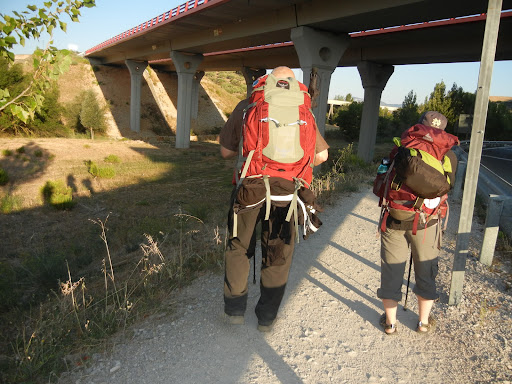
The Camino has its industrial side (this company specialized in huge piles of cedar-y smelling sawdust), and it’s cheesy side. Don’t know what the bull is advertising — beer? Football?
Un pulpo (octopus) peregrino. For Regina Carns.
More commercial stuff along the way — an ad for the vineyards across the road.
Grapes in the vineyard across the road.
Morning glories.
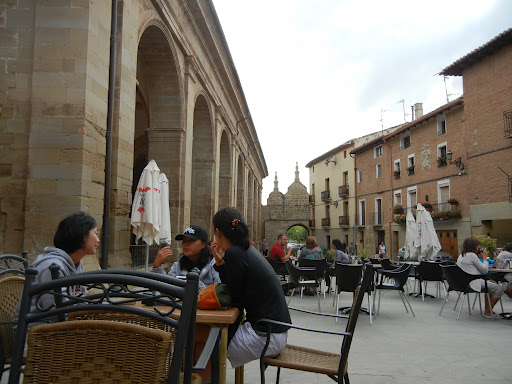
One last bit of cheesy tourist stuff — this cigar-store-Indian-turned-peregrino holding an ashtray outside a bar. The guy running (owning?) the bar was an aging rock singer. Embedded in the floor of the bar, underneath plexiglass, was a guitar, and a couple of photos of him with a hot young woman and the guitar. There were other photos of him in his rock days around too. We asked for bocadillos (the baguette sandwiches); he asked us to come back in 15 minutes because the bread was in the oven. He served us the baguettes still warm, and gave us a little cup of olive oil to take with us to pour on. So good!
A Spanish cat in one of the streets of medieval Navarette (it is considered a well-preserved example of the time).

Posted in 2012, Camino de Santiago de Compostela, Camino de Santiago trip, travel | Tagged , , , , , , , | Leave a comment

Fourth day of walking — Estella to Los Arcos

The albergue guy tells me that they cut off the email at 10:30 — the rest will have to wait until tomorrow.

We got started at 7:20 a.m. — well ahead of sunrise, but enough light to see the yellow arrows and scallop shells that sign the way west. Blessedly, the morning was clouded over for several hours — enough time for us to do our major climb of the day, about 200 meters (600 feet) up to Villamayor Monjardin. Even with the temperature in the low 70s in the morning, it was muggy and we were sweating within a few minutes.

The first stop, after the first hour’s walking uphill, was at the much-anticipated wine fountain of Irache (photo below), where red wine runs free for peregrinos (18 and older, presumably). But the groundskeeper indicated in a fountain of fast Spanish that whoever manages it was on vacation! We sat for a few minutes, later, to drink our own coffee and eat snacks; then stopped by the Irache camping grounds to check them out. They had all sorts of sports, a huge  lounge with half a dozen billiard tables, all sorts of video games, kids’ riding machines (the kind you plug with a coin and the kid bounces for a few minutes), an inflated “ball room” for kids, and much more. One of the cycling groups that keeps passing us stayed there for the night; they streamed out and up the hill in their bight-colored Spandex.
We followed them up the dirt path (much of what we are walking on is dirt and gravel) through a pine forest and then more fields to Azqueta for coffee and cats. Their sign, painted on a wall outside the city has a cheshire cat-ish feline, and the town square had half a dozen of the small skinny but well groomed cats that we’ve seen elsewhere. They begged for food and attention; then went off when the offerings weren’t entirely satisfactory. As we were walking out of the square, an old man who’d been sitting on a bench commanded us to come with him so that he could stamp our credencials — we’re not in tune with that yet. We followed him into a tiny room, along with a woman from Winnipeg and another peregrino; he inked the stamp, set if firmly on each credencial, and then slowly wrote the date. We left; the other peregrinos stayed behind, and as we strapped on our backpacks at bench outside, we heard him singing for them is a cracked voice — perhaps the national anthem?
We stopped in the village near the top of the mountain, for an early lunch and coffee at a bar with another cat. From there, the path led down the hill and into Los Arcos. The guidebook warned that there were no facilities, no water, nothing but fields and ruins with little shade for six or seven miles. It was correct. We left about noon from Villamayor du Monjardin and reached the outskirts of Los Arcos at 3:20. The first hour wasn’t bad; the sun still wasn’t full out, and there was an occasional breeze. The second hour, up a little hill, down a little hill, a flat stretch or two, up a little hill . . .  stop at every patch of shade to sip water and cool off (I discovered that pouring just a bit of water into the crown of my cotton brimmed hat kept my head cooler — Jim and Anthea observed that it also attracted dozens of flies. I was fine with that — if they were sitting on my hat, they weren’t buzzing in my face and on my arms).
What was interesting? We saw a couple of hawks swooping high above the fields. The vineyards seem to thrive — healthy brilliant green leaves, with thick bunches of small purple grapes hidden beneath them (we had the local red wine in Cirauqui and liked it). Several ruins stood along the way – an old castle at the very top on Mon Jardin — hard to imagine the difficulties of building it up there. They’re all a dark reddish-brown stone, very simple and squared-off in their shapes.
The sun was out, the breezes random, and the temperature in the low 90s. The rest of the hour and twenty minutes into the town were sheer will power, pumped up by the knowledge that if I collapsed, there was no shade for miles, and it would be a while before anyone would be able to come along and help. In this part of Spain, farmers don’t seem to live on their land — there are vast sweeps of wheat fields, vineyards, olive groves, and even small truck farms with not a single building other than the occasional ruined monastery or castle in sight.
The first building we came to at the very edge of Los Arcos (The Arrows — The Arches?) held vending machines and maps of the town with a sign that said, “For the benefit of pilgrims.” We sat in the shade and drank Cokes, unable to move much for a good twenty minutes. Then we pulled to our feet and walked to the first albergue in town, where my backpack had been taken. They had a private room with four bunks; for 35 euros (about $50) we could have it for the three of us — shared baths, no lock on the door, blankets, a clean sheet on the (thin) mattress), and a pillow with case. We took it. Like many places along the Camino (and from what I’ve read, many of the albergues), it’s pieced together out of the very old (the large common area has thick tree trunks for beams and stone walls) and a hodgepodge of the new — decorating thrift store style. The manager who was maybe in his 40s with terrible teeth, a raspy voice, a scruffy ponytail, made me a little peregrino figure out of wire; Anthea made him an origami crane, which he put in a little niche in the office area that was filled with offerings from other pilgrims.
Two nights ago in Cirauqui, the albergue owner seated us at dinner with an Italian woman and a French-Canadian couple. We saw Graziella briefly yesterday, and then found her here this evening, so went to dinner with her at a restaurant in the town plaza. She wanted to sit outside — it had turned windy and cold after the day’s heat, and we put on sweaters, marveling at the quick change in the weather. The church bells began ringing, right overhead, announcing the evening Mass; Graziella pulled me inside to see the Twelfth Century church, St. Mary of the Arches, which like many has been embellished over the years with Gothic, Baroque and whatever else came along that was gilded and ornate. It’s beautiful, and has an inner courtyard with Romanesque/Gothic arches and a rose garden in the middle.
She can converse pretty well with Anthea in Spanish, and we talked with the help of a Spanish dictionary and a fair amount of mime (at which she is excellent).
It was  a long day; 15 1/2 miles from the beginning to the edge of Los Arcos — too long, we agreed, especially in this weather. For tomorrow we will aim for Viana, about twelve miles away. The forecast is for low 80s, with a chance of rain; for the rest of the week, it’s supposed to be sunny and in the 60s (45 degrees at night).
Various thoughts occurred to us along the way — one being that for the Carns family, to drive 450 miles in a day (the approximate distance by road from Pamplona to Santiago) is a pleasant, but not particularly tiring road trip. Another thought that we seemed to share was that the long trek through the fields the second half of the day was not fun, not beneficial to our spiritual or personal growth, and we couldn’t think of a good reason to do it again.
Here are some Camino views from Anthea, who has been blogging as we go along (using her smartphone, which I haven’t mastered at all — I am carrying my netbook, and using that).

Alto de Perdon.

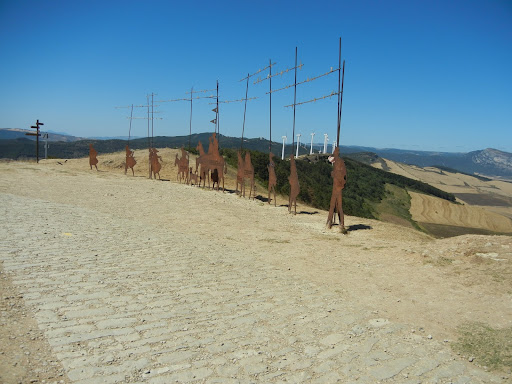
[August 26, 2012– First day of walking] That means “Height of Forgiveness,” and traditionally a pilgrim reaching this height was pardoned, even if she didn’t make it all the way to Santiago. The wrought iron statue of peregrinos here – a recent addition – reads “donde se cruza el camino del viento con el d las estrellas.”

And it is the path of the wind. Above me and stretching off along the hilltops are wind turbines. Their steady thrum contrasts with the higher, faster chirrup of a grasshopper nearby.

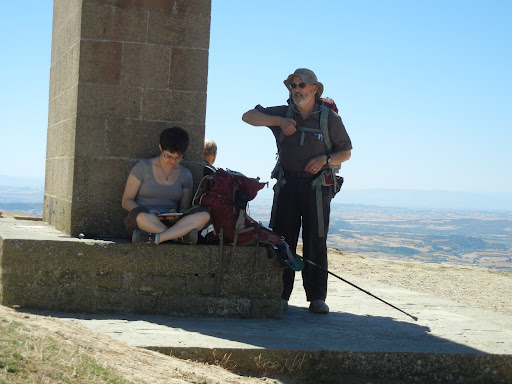
I am sitting in the shadow of a stone shrine much older than anything else up here, waiting for my parents to catch up and feeling the arches of my feet relax from the long climb. My decidedly untraditional pedometer app tells me we have walked more than 7 miles already.

Beside the shrine is a cairn. People have written on the stones they left, benedictions and remembrances. Hats and scarves are pinned under the stones. Ribbons are tied to the peregrino sculpture. I have nothing to leave; the stone in my backpack I am saving for Cruz de Ferro, later in the trip. So I kneel before the cairn and kiss my fingers to the stones, then I sit and I write, taking away intangible things since I have nothing tangible to leave.

LAFAYETTE, WE ARE HERE. [August 23 and 24.]

Here being Barcelona! With all the time zone changes, we got here . . . Approx. 36 hours after leaving the house. So since the Camino pilgrimage – and indeed, all pilgrimages – traditionally begins with the first step out your door, I have been on pilgrimage since yesterday.
It is, as Bilbo said, a dangerous business, stepping out your front door, but thus far the worst we’ve had to deal with was non-functioning wifi in Heathrow and the hostel mixing up our reservation such that we have a room with a shared bath rather than a private.

This is my first time in un pais hispanohablante – a Spanish-speaking country – and it is an absolute thrill to be someplace where I can communicate with relative ease. I mean, I’m worried that when I greet people in Spanish they’ll think I’m fluent, but . . . Like, the guy checking us into the hostel was trying to explain that he’d had Mom sign the wrong credit card slip and I was able to act as an interpreter (although much to my amusement, that interaction drew as much on my recent experience running lots of credit card charges as on my ability to say “You charged this already – ya, ya-” “¡Si!”).
Tomorrow, whether I like it or not, we are doing touristy stuff. I do want to see La Sagrada and La Rambla, which I guess is a market-y street, but mostly I find I am itching for the pilgrimage. Traveling and tourism (especially with parents in tow) are complicated. Walking is simple. Point me west towards Santiago and let me walk.

And here are photos from today, Estella to Los Arcos. I haven’t figured out the camera, even yet. I take pictures, I think, and then they never show up.

Uno gatito en Azqueta (a little cat in Azqueta), with Mont Jardin in the background. By Anthea.

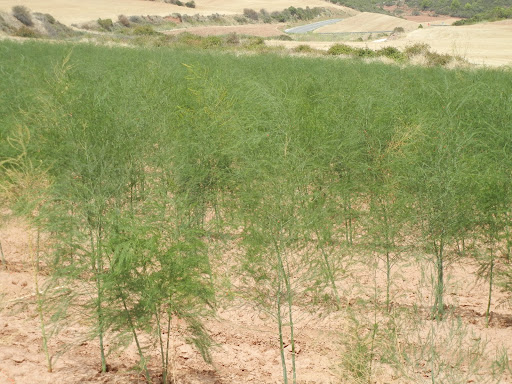
Asparagus fields near Los Arcos, with the dirt mounded up around them to keep the stalks white.

The pilgrim’s delight — a tiny speck of shade on the road. The red dirt is typical of Rioja, the region that we’re in; the golden field at the back is wheat stubble; the hills are covered with scrubby trees, some of them Holm Oak, some pine. The path, very typical of what we are walking on, is dirt, pebbles and dust. When wet, it’s a bright reddish tone, and apparently turns into very sticky deep mud. The wheat fields have been cultivated since Roman days — I need to find out how they’re done that while keeping the soil fertile.

Pilgrims dining outside in the plaza at Los Arcos, in front of the church (to the left).

A photo from yesterday, around 9:00 a.m., on the way to Estella. Jim, Anthea and me casting our shadows.

A fig tree, with figs. We’ve seen apple trees (not many), olives, date palms (in Barcelona), and more — it’s very Biblical in some ways.

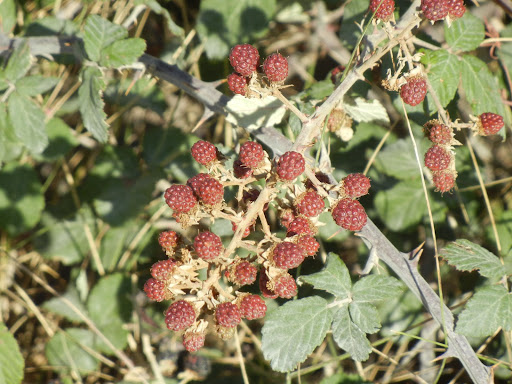
The tiny raspberries that grow wild along much of the path. When they turn black, they are delicious little bites for morning breakfast, or afternoon dessert.

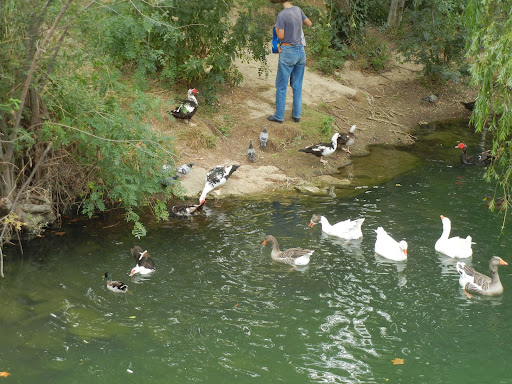
Woman feeding the ducks in Estella, at the Rio Ega (August 28).

Posted in 2012, Camino de Santiago de Compostela, Camino de Santiago trip, travel | Tagged , , , , , , , , , , , , , | Leave a comment

August 28, 2012 — Estella –Third day of walking

Hello all – we found ourselves in Cirauqui last night, described in the guidebook as an exceptionally well- preserved medieval hilltop town. It had no Internet — the albergue owner thought that perhaps we could sit in the town plaza and get the government Internet, but that didn’t work, so tonight is catch up. These are largely unedited notes; hope they are reasonably well-connected and readable.
We’ve walked for three days now, and a few things are becoming evident.
One, it’s hot. All of the locals are complaining that it’s too hot. Hot means from 30 to 33 degrees centigrade (high 80s to the low 90s). This morning we left at 7:00 a.m. — dawn — and some clouds came in for a couple of hours. It was most pleasant. But then the sun broke through.
This brings us to the second thing we’ve learned — The Camino is hilly. There’s a flat section (the meseta) that starts in a week or so (billed by many as boring; and by most as without shade or water). But for all of the reading I’ve done about the route, it had only recently begun to sink in that this was not a walk in, for example, Amsterdam. On the average day, reading ahead in the guidebook more closely based on experience, there’s an average elevation gain of at least 300 metres (984 feet). That’s not 1,000 feet up every day — it’s a few hundred feet up, then down, then up, then down. I wasn’t at all expecting that, and it’s taking a bit of getting used to.
And the third thing  I’ve learned is that I’m not going to carry my backpack. I confess to it all — I brought too much stuff, the backpack doesn’t fit right, I didn’t train enough — anyone who would like to say, “I told you so,” should feel free to do so, because many people did tell me so. But we’re here, and I’m not going to stop the trip because I set out wrong. I shipped the bag yesterday — six euros — and it showed up today exactly where it was supposed to be. The trickiest part is that you have to ship it to a specific place, and you have to get to that place yourself. So it requires a certain commitment that you will walk the distance (or take a cab — we’d still rather not do that). I have a lightweight small dayback to carry the things needed for the day; plus the computer and a few things that I couldn’t do without it the bag got lost. It worked OK today, and I’m hoping that it will continue to do so. Anthea and Jim will carry their bags, at least for now.
Tonight we’re in Estella; it was a short day of walking. We’re averaging about 11 miles a day, plus a couple in the towns — the temperatures have been in the high 80s and low 90s, and much of the distance has no shade.
In view of the lack of Internet, I composed yesterday’s notes on the computer and will post them below, along with photos.
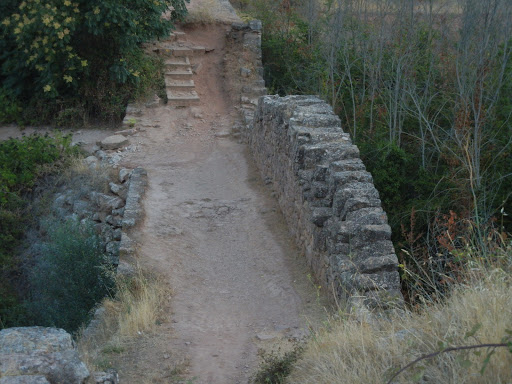
Today we started out by walking on the old Roman road — stones that were laid 2,000 years ago, and are still walked upon (but I wouldn’t want to drive a vehicle on them — pretty rough. We struggled (me, with the help of Jim and Anthea) down very steep steps to the old Roman bridge, and back up the other side. Along the way we ate lots of tiny black raspberries — we’ve seen figs, apples, grapes today — one could eat fairly well as a forager along the Camino.
We had many more companions today walking from Cirauqui to Estella (many of them undoubtedly started further back, and caught up and passed us — Jim and I have yet to pass anyone because I walk relatively slowly). Some from the U.S., England, Australia. More Germans; plenty of bicyclists, a Korean woman, and other European countries.
Our tans (sunburns actually) are Camino style — mostly on the left side, because that is where the sun is as we’re walking west.
It’s 9:30 at night and dark, but there are still kids playing soccer on the street below the pension where we’re staying. At 8:00 in the main plaza dozens of kids, from toddlers to teenagers were playing soccer, riding scooters,  falling down, scoping out the other kids, etc.– many more kids than you would ever see randomly playing in the U.S.
Time to add photos and send this on — hope all are having a good week — Teri, Jim, Anthea
August 27, 2012 – Cirauqui – Second Camino Day
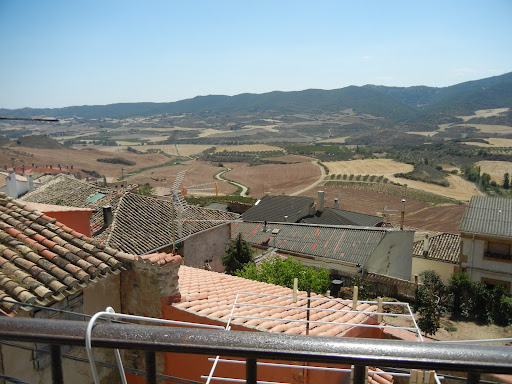
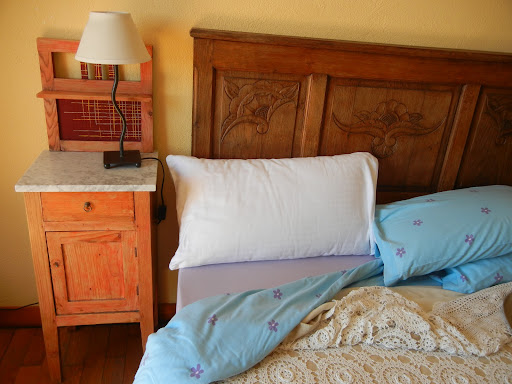
Picture this – Carved wooden headboard. Lace bedspread. Hardwood floors. Wood and glass French doors opening onto a tiny balcony. And beyond the balcony, because this albergue sits on the top of a hill in a medieval town, the houses drop away sharply below, and the room looks out over a valley and the hills beyond. In the valley, the land is patchworked with vineyards, olive groves, golden wheat stubble, and red-brown plowed fields. Forests cover the hillsides.
We are on the back of the albergue where we have decided to settle in (being unable to actually move any further); the front faces onto the plaza, where the church dominates – every quarter hour, its bells chime. A breeze sweeps away the heat of the sun from the room, and Jim sleeps soundly – siesta time. Anthea and I are eager to get to the pharmacy and the supermarket, both of which open again at 6:00, but we don’t want to miss dinner or the church event.
Food today has been bread and cheese. This morning it was toast with four cheeses (melted and browned); for lunch it was a minimalist bocadillo (sandwich) – a baguette sliced in half with a few slices of cheese slapped between – no tomatoes, no mayonnaise, no frills at all. We are hoping for something at dinner that involves actual fruit or vegetables.
Wonders of walking sticks, and hats. Walking sticks are Godsends. We have one each; mine was a gift from a friend 15 years ago, before the bone marrow transplant, as a token or reminder of the Camino. Jim and Anthea have Leki brand; all three are collapsible. They make an immense difference on the uphills and downhills (and have I mentioned that there are way too many of those? And I bought a hat yesterday in Uterga – much lighter weight than anything that I saw at REI, and therefore perfect for a hat-o-phobe. I wore it today, in the mid-90s heat, and just like the walking stick was greatly surprised at how much it helped.
Red dirt west of Rio Arga – start seeing olive groves, vineyards.
Wildlife for the day: two big black beetles, both stuck helplessly in the road, so  we moved them; a striped lizard. Some birds. Donkey droppings. Some skinny, but well-kept cats.
In Muzarbal and Obanos – the smell of money – manure . Started off at 7:40 a.m., with the sky clouding over. When we stopped at 10:00, looked as if they might bring rain. Burned off by 11:00 or so, and has stayed hot, mostly sunny. A breeze again, much of the time, at our backs.
The 5:00 dog chorus – just after the churchbells announced 5:00 p.m., the dogs started barking and barking and barking. They’ve died down a bit (5:15 p.m.) 9:45 – they’ve been on and off all evening. Not entirely clear what sets them off.
9:50 p.m.  – Walked around taking photos – the church of Saint Catherine Santa Catalina has most of the heads of the statues around the entrance knocked off – by whom? The Protestants did that, but did the revolutionaries?
Shopped with Anthea, for sunburn cream, bandaids, Purrell. At the Supermercado, got dates (I thought they were black figs), oranges and an apple, pastries for breakfast. Went to Mass – ½ hour, total (no Gloria, no Creed). But before hand, a group of 15-20 people, mostly women, two men, sat praying the Rosary (not kneeling). The cantor spoke the first part; the others responded, filling the church with their unsynchronized answers, echoing off the baroque gold altarpieces, the painted but unadorned walls, the Romanesque stone columns. I liked the priest – he seemed to believe in what he was doing, but without any fanaticism in his tone (not sour like the first priest in Barcelona last fall). A half dozen pilgrims besides us attended. No place to light candles. The large crucifix was off to the side – St. Roman (whoever he is) had the place of honor behind the altar, with a small crucifix high above. The tabernacle and lectern (ambo? Pulpit?) were very modern, with dark green marble; the tabernacle itself was a brushed gold with modern design – but it all fit in well with the Baroque.
Then we went to dinner. The Albergue owner seated us with an Italian woman who is walking in stages, and seemed a bit cynical at times (and she refused to toast with us), and a French-speaking Canadian couple – the man spoke a little English, and conversed with Jim. The woman (Jacinto?) didn’t seem to speak either English or Spanish or Italian. The Italian and Anthea and I at one end of the table conversed some. We all ate spinach soup – a puree that tasted as if it might have potatoes in it as well; pasta, and a bowl of meatballs in tomato sauce – all served family style. Dessert was a pudding with a cinnamon-dusted small cookie on top. The wine was local, red, and good; there was water as well.
How are we faring, after day 2 (about 12 miles)? I claimed the first blister (it’s not quite a blister yet, but a toe that’s been a problem before and appears ready to start again). I have lots of sore spots from the backpack, and it’s very tiring to walk.  So, I’ve decided to send my bag to Estella; to the first albergue. We will pick it up there and look for a place to stay (or do it in the other order, perhaps).
Jim has no complaints but fatigue; Anthea’s sunburn is still bothering her. We have Camino tans – mostly on the left side. We are always walking west, and unless it’s late in the day, the sun is either behind us or to the south.
Today we walked in the morning – when it was only in the high 70s – alongside plowed fields, wheat stubble, and the beginnings of vineyards and olive groves. We picked tiny black raspberries from bushes along the path, and admired the spreading bushes covered with small orange rose hips. The sky clouded over for a few hours; we expressed proper gratitude for the lack of sun and the lack of rain, both. At Obanos, we stopped for breakfast – we’ve agreed that we should stop to eat and drink every two hours – it’s the only way to stay sane and able to continue walking.
At Puente la Reina, we made our way through town looking for an open pharmacy – none to be had. And we passed up several stores with delicious-looking produce because we weren’t ready to eat and didn’t want to carry it. Maybe a mistake, because Cirauqui had only a small grocery with few fruits or veggies. We walked over the bridge that gives the town its name – the “Bridge of the Queen.” Dona Mayor, the wife of Sancho III, built it to save the pilgrims from the greed of the ferry captains who controlled the only way to get across the river.
Soon after Puente la Reina, we started up another steep hill, about a third the distance of the Alto de Perdon on the first day. The gravel path curved up and up – the pilgrims on foot passed us (most of them had passed us before Puente la Reina); the bicyclists panting along in their lowest gear passed us; the people walking their bikes passed us . . . But the pine forests were scented, and the views back behind us were dramatic. We met Anthea at Maneru where we found a bar to serve us small beers (Jim and Anthea) and decaf espresso (me), along with bocadillos – sandwiches that in this case consisted entirely of a baguette cut in half and some slices of white cheese slapped on.
     [End of notes for August 27 — at night, the clouds covered much of the sky, but the moonlight edged around them, and sheet lightning filled the air for a couple of hours.]
The view from our balcony at the albergue in Cirauqui.
Our charming bedroom, with lace coverlet and carved wood headboard  in Cirauqui.
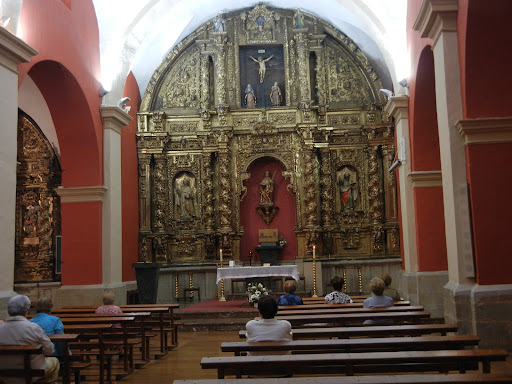
The very gilded Baroque altar in Cirauqui’s main church. The church is Romanesque from the 11th or 12th century, but in many of the old churches, the original altars were replaced a few hundred years later with the much gaudier Baroque styles.
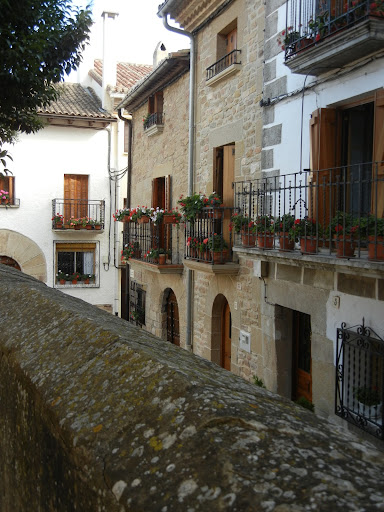
A street view in Cirauqui from the church plaza.
The Roman bridge.
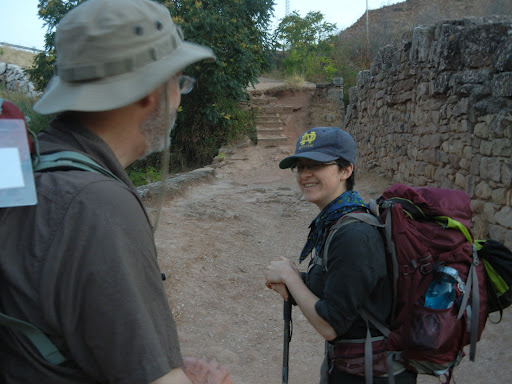
Jim and Anthea on the Roman bridge.
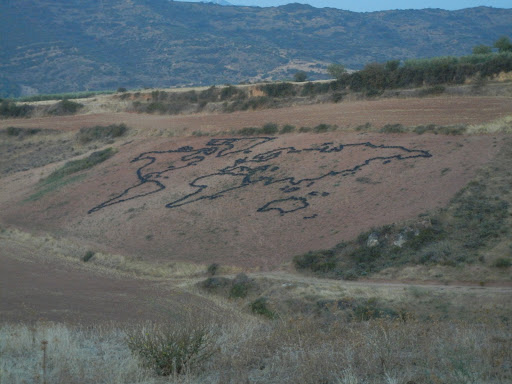
Someone created outlines of the continents on a hillside that we passed this morning. It was too far away to figure out they did it, but they did a great job.
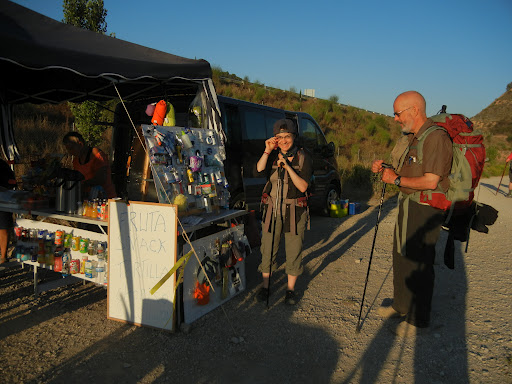
A food truck on the Camino this morning, offering coffee, juice, etc., plus Camino trinkets, hats, walking sticks (not useful ones) and so forth.
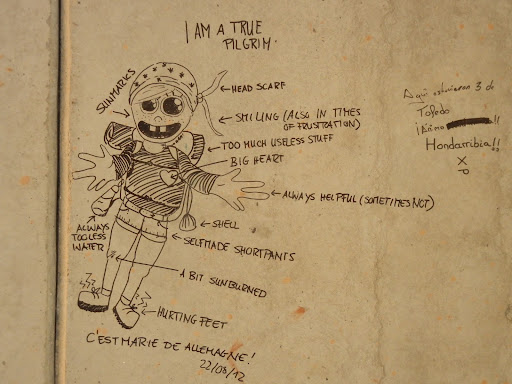
Graffiti in an underpass along the Camino today.
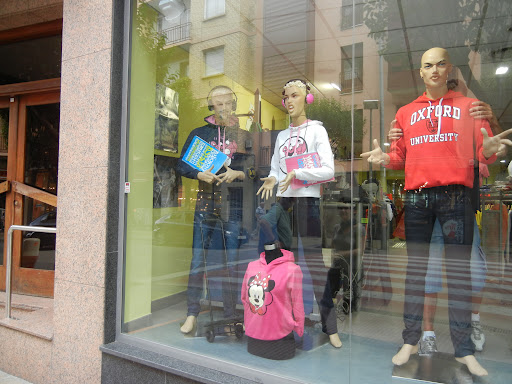
Edgy mannequins in an Estella store.
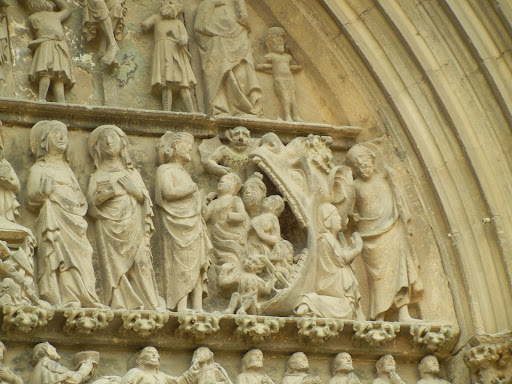
A medieval monster mouth (to the right) eating people, and other sculptures on the Romanesque cathedral in Estella (I think — maybe Pente la Reina?  Getting late).

Posted in 2012, Camino de Santiago de Compostela, Camino de Santiago trip, travel | Tagged , , , , , | Leave a comment

First day of walking — Pamplona to Urtega

The pedometer says that we walked something in the neighborhood of 25,000 steps today, from our hotel in Pamplona to the albergue in Urtega, a small town about 17 kilometers (9? miles) west (we’re always walking west). That included walking up to the top of Alto del Perdon (the hill of pardon), and much of the way back down, an elevation gain of about 300 metres (1,000 feet).

Think sunny, mid-80s, little shade, a good breeze blowing across the fields — it wasn’t too bad, for weather (tomorrow is supposed to be mid-90s). We started about 8:20 a.m., took a break for croissants and coffee at 10:00; another break at Zariquiegui at 12:30, and arrived at the top of the hill about 2:00. The guidebook describes the path as “natural,” which in fact meant that it was rocky and bumpy most of the way. Going down the steep west side, the path was loose large pebbles and rocks, and dust. It wound through fields of sunflowers at the beginning, some green still, and some hanging black heavy heads, ready for the harvest. Wheat and hay stubbled fields stretched away as far as we could see, with mountains in the distant background, and Pamplona, a ruined castle, and a few small villages for variety.
It mystifies me why anyone thought it was worthwhile to climb up and over The Hill of Pardon — it seems that it might have been a lot easier to go around. But I haven’t looked carefully at the geography of the area, so it may have been the best choice. Given the number of hills we have yet to climb and descend from, I may be entertaining this thought frequently. In any case, since the Middle Ages, people thought it was difficult, so much so that if you made it to the top and could go no further, your sins were pardoned without having to get to Santiago. The pilgrims are commemorated with an iron sculpture of several of them, leaning into the west wind.
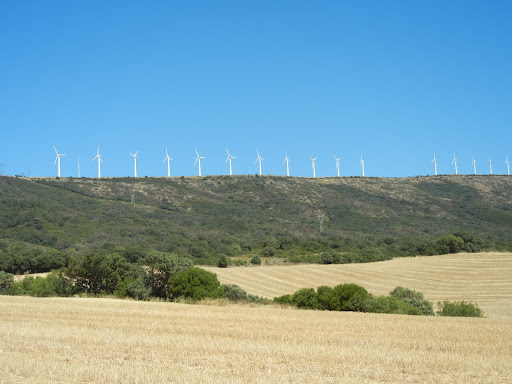
More recently, wind power companies have found the ridge to be good for things of the world, and have installed a couple of dozen white swooshing wind turbines at the top. Above, the occasional hawk circles; in the fields below, birds sing and hunt the plentiful insects — grasshoppers, wasps, bees, butterflies.  Along the margins of the road we saw Queen Anne’s Lace, thistles, teasels, chicory — all of them familiar from childhood in Michigan. A man was collecting blue berries from a prickly bush — he said that they were for making liquor; not good to eat. But the tiny black raspberries, dusty from the path, were sun-warmed and tart, very edible.
And how did we fare? Anthea and I are sun-burnt despite the sunscreen (perhaps not applied soon enough). Our feet survived very nicely — remarkable because the trail was rough stones most of the way, uneven, dusty and  hard. Many Camino complaints revolve around feet, so we felt very lucky. By the time we got to Urtega, about 3 miles short of our destination of Puente la Reina, we were exhausted — our first day out — and found a wonderful cafe with cold beer and hot coffee — we decided to call it good. The albergue (pilgrim hostel) had a private room with bath as some do — very clean, comfortable, pleasant — we were sold. Jim slept; Anthea and I went down for the pilgrim menu del dia (menu of the day). They gave us two courses (several choices in each), bread, wine, water, and dessert — all delicious, for 17 euros total — an excellent price.
We were intrigued, of course, by the other pilgrims. Early on, we walked a little ways with a guy from Denver (who brings his son to the Kenai Peninsula near Anchorage every year to fish for silver salmon). He was there with his wife and post-college son and daughter — the kids were happy to come if dad was paying. Later, we met a woman from Salamanaca in Spain — maybe 40, who had been on holiday in the French Pyrenees with her husband and son. She decided on the spur of the moment that she wanted to spend the last few days of her vacation walking as much of the Camino as she could; tomorrow, the family will come and pick her up in Puente la Reina and she will come back another time to walk some more. There were dozens of cyclists riding up the steep and rocky trail, all in Spandex and looking exceedingly fit. Everyone passed us — I am still recovering from anemia earlier in the summer, and am pretty slow (Anthea went on ahead along a couple of stretches). In the dinner room, people who were eating there were well-dressed — they did not look as if they were the sort to wear one set of clothes, and sleep in the clothes they were going to wear in the morning. One woman had charming sandals with little heels, not even appropriate for walking around town.
Time to end and send — we hope to be out by 7:00 or 7:30 tomorrow to avoid that heat that’s been promised. With any luck, the dog that’s been barking much of the evening will settle down soon. More tomorrow —
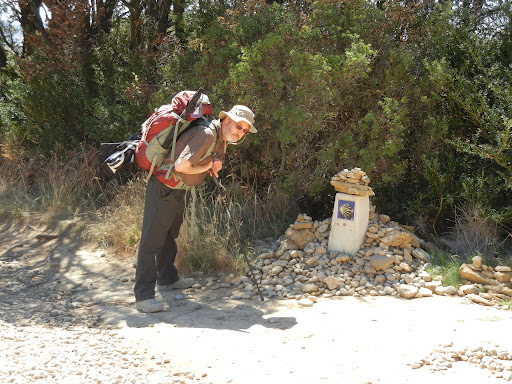
Our first Camino marker, on the grounds of the University of Pamplona.
View of Pamplona and the mountains from halfway up the hill.
Jim and Anthea at the top of Alto del Perdon — Anthea got there well ahead of us, and is reading her Kindle.
The pilgrim sculpture at the top of the hill.
Looking back at the wind turbines from half way down the hill toward Urtega.

Jim admiring cairns on the downhill path — there was an area with dozens of them.
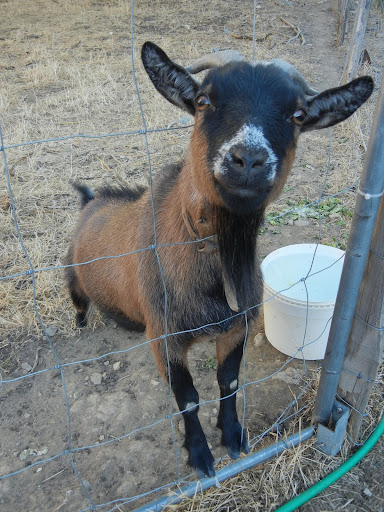
The albergue’s goat, looking for a handout.
T.
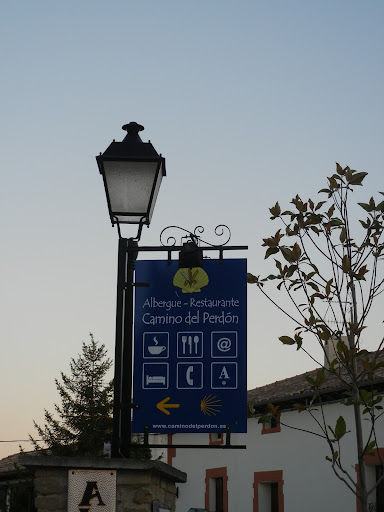
The albergue’s sign — very highly recommended place to stay.
.
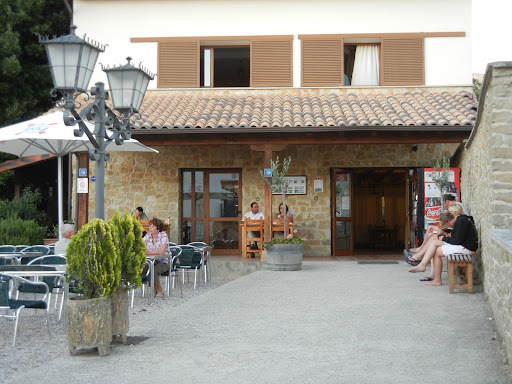
The albergue’s courtyard, about 8:30 p.m. — people still sitting out and enjoying the evening.

Posted in 2012, Camino de Santiago de Compostela, Camino de Santiago trip, Israel | Tagged , , , , , | Leave a comment

August 25, 2012 — Pamplona

First day of the journey, really — Barcelona was play. Here’s Anthea’s summary:

“Aqui estamos en Pamplona – finalmente, despues de un acidente con mi cafe por la mañana y un viaje de tren que cambió a un viaje de autobús – y ya encontramos otra peregrina. Aquí vamos… // Here we are in Pamplona – finally, after am accident with my coffee in the morning and a train ride that changed to a bus ride – and we already met another pilgrim. Here we go … — with Teri Carns at Cerveceria 100 Montaditos.” [where we are lunch]
We took a cab to the train station from our Barcelona hotel, and surprising to me, got the 9:30 train to Pamplona. And the train left on time, going up into the mountains, and then across a wide plain, made by the Rio Ebro. Although the color of the soil is light sandy gray and it looks dry and dusty, the corn (and there was plenty of it) looked a lot better than much of Iowa and Michigan. Some fields were irrigated; others appeared to just be healthy. We saw orchards, a few vineyards, piles of hay bales, and fields with unidentified green growing things, along with acres of greenhouses. In the distance, scrubby ridges rose, and in uncultivated areas, the green things were sparse and stunted, aside from the pampas grass which grew 15 feet high. None of the farms appear as prosperous as most of those in the Midwest — stucco buildings, with corrugated metal roofs or red tile dominate. We noticed before how infrequently anything is built with wood, and that is still the case. Some wind farms dot ridges, and we read in the guidebooks that we will see more as we walk west.
But our speedy comfortable train trip came to an abrupt halt in Castlejon de Ebro. Some mysterious electrical glitch caused them to pull all the Pamplona passengers off the train, and send us on, an hour later, by bus. When we finally  arrived In Pamplona, and I was struggling to pull on my backpack, a young woman introduced herself as Lisa from Perth and asked if we were walking the Camino. So we gave our first peregrino (pilgrim) friend a ride in our cab to her albergue several miles away, and wished her a Buen Camino.
Our own hotel turned out considerably more refined than I expected when I made the booking. The shower has a glass door on it (unlike most European showers in the sort of places we stay, which tend to have a curtain that might or might not contain most of the water inside the very small, very shallow shower floor). The place has air conditioning (pleasant earlier in the day, but not needed this evening) and a large lovely balcony with several comfortable arm chairs and a couple of tables; big windows that open to the sun and breezes, but easily enclosed against unpleasant weather. The building is located near the university hospital and clinics along with dozens of other similar new buildings, several large parks, and a number of restaurants.
The restaurants — Anthea and I spent an hour searching for a spot for dinner that was more modest than last night’s slight splurge. We found Turkish (with little that I could eat),  Indian (closed for vacation), Chinese (closed), Asian (closed, despite the sign that said it opened at 7:30 on Saturday), and numerous Spanish restaurants. Those fell into two categories — ones with colored photos in the windows (which I think that the owners buy wholesale, and then they just make the items pictured that they want to and ignore the rest), and ones with no pictures and high prices. So we ate at a no photo place; pretty good food. Anthea and I had spinach crepes that seemed much more French than Spanish, and Jim had the menu del dia, with a large bowl of veggie soup and a half chicken with peppers fixed Spanish style — very bitter whole small green peppers. The waiter didn’t have much else to do and stood off to the side watching us eat. He was right there as soon as we finished with something, but it puts a damper on one’s enjoyment of the food to know that someone is lurking, watching your every move.
Tomorrow we plan to walk about 14 miles to Puente la Reina (the bridge of the queen, named for a queen who built it to make the lives of pilgrims easier). We shall see how far we get.  The predicted rain this weekend never showed up, and the forecast for the week is hot and sunny. We have a sizable hill (Alto de Perdon) early in the trek to get over. Today’s weather was fine — low 80s and a good breeze,but we were in the train/bus, so didn’t get to take advantage of it.
Pamplona? Our hotel turns out to be at the western edge of town so we have a head start on the morning. The cab driver took us by the bull ring and the street on which the bulls run, but minus the crowds and panting rushing animals, it was pretty tame. Anthea and I walked around the immediate neighborhood, but we really can’t say that we’ve seen Pamplona.
 
A couple of people have asked why we’re here and I realized that some background would help. We’re walking along the path of a pilgrimage that dates from about 900 C.E. – The Camino (Road or Way) of Saint James (Santi Iago, or Santiago) of Compostela (sometimes translated as field of stars, but also as burial field). The path runs along ancient Celtic pathways that ran from the Pyrenees to Finisterre (Land’s End) on the Atlantic coast. The Romans built on the Celtic roads because they were adjacent to iron and gold mines. Around 840 C.E., a peasant followed a star into a field near the west end of the road and dug there; he found the bones of St. James and two disciples, and immediately told the king. The king built a church over the spot, and pilgrims quickly started coming. From about 1000 to the Reformation in the mid-1500s, 250,000 people came every year to Santiago — Dante, Chaucer, Queen Isabella and her King Ferdinand — royalty, bishops, the Wife of Bath, and people of every description.  Some have explained the appeal of the journey as a chance to leave home in a day where the idea of vacations and leisure travel didn’t exist. Many went because of the spiritual benefits to be gained — complete forgiveness of all your sins, and a much stronger chance that you would go to heaven. Others went because they were sentenced by judges to go as retribution; some went as penance for their ill deeds. If the offenders and sinners were able to return to their towns with their certificate, they were forgiven. If they didn’t return, at least they died on the pilgrimage and were therefore probably blessed.
 
In the 1600s through 1800s, the pilgrimage lost its meaning and appeal for most, but by the mid-twentieth century, people were re-discovering it. Last year,about 146,000 people got certificates from the pilgrim office in Compostela; it is likely that more did parts of the pilgrimage and didn’t get the certificate. 
Why are we going? More on that another day; it’s very late, and we want to be on the road about 8:00 a.m.
Anthea contemplating exercise park near our hotel and deciding that walking the Camino will probably get her into pretty decent shape.
Post birthday party in the local park.
Posted in 2012, Camino de Santiago de Compostela, Camino de Santiago trip, travel | Tagged , , , | Leave a comment

August 24, 2012, Barcelona


29 degrees C. . . . 33 degrees C. . . .  34 degrees C. — At 2:00 p.m., it just keeps getting hotter. People in the Lower 48 and elsewhere are used to this — the Alaskans are not.  We’ve retreated to the air conditioned, wi-fi-ed, electrified Starbucks at the Mall for a break from the sun and heat. We came here last November, when it offered dry warmth and a break from the Barcelona rain. It’s good to have a retreat — we are thinking that there won’t be many Starbucks along the Camino (I haven’t heard of any).
For want of air conditioning last night because the power in the room was out, we slept with the balcony window open. Anthea and I woke at 5:30 a.m. to (Anthea’s words) “the sound of three guys walking down the street singing – rather well – about Barcelona. To the tune of ‘Yellow Submarine.’ …okay!” They were clapping, and alternating the singing with marching orders.
When we were here last November, the beach featured surf and black-clad surfers, even on rainy days. In the late-autumn sun, a few brave souls soaked up rays, and people walked the beach. Now, in August, umbrellas shade half the sand, and bikini-ed and Speedo-ed bodies cover the rest. No surf today, but at least a little on-shore breeze cooled us as we ate our lunch (seedy green grapes and croissants from the Market and chocolate from Escriba) on a palm-shaded bench.
 
. . . Now it’s been an hour and a half of chilling and computing,  and we’re ready for a nap — it’s a good three miles or more back to the hotel, so we’re getting our walking for the day in (about five miles so far).
 
[Later] Our twelve miles today (that’s 3/4 of a Camino day, although without the 20-pound backpacks) hardly seemed difficult, except for the heat. Barcelona makes it easy and pleasant to walk — the traffic lights give pedestrians lots of time to get across, the drivers obey the signals (OK, the cabbies push it a bit), the sidewalks are wide and clean, and often shaded with sycamore (plane) trees. Motorcyclists don’t drive on the sidewalks (as in Athens), bicyclists don’t claim them for their own (as in Anchorage), almost everyone cleans up after their dogs, and the pavements don’t resemble an obstacle course for the unwary.
 
Anthea and Jim have packed, and I should be finishing up. This is one of the drawbacks of RVs and backpacks. Everything must have a place, and must go back into it. It’s a lot of time spent  unpacking and repacking, and I know that answer — just take less stuff. At some point, we may discuss that, but for tonight, it must be fitted into place for tomorrow’s train trip to Pamplona.
 
 
Regina, meeting us at Sea-Tac.
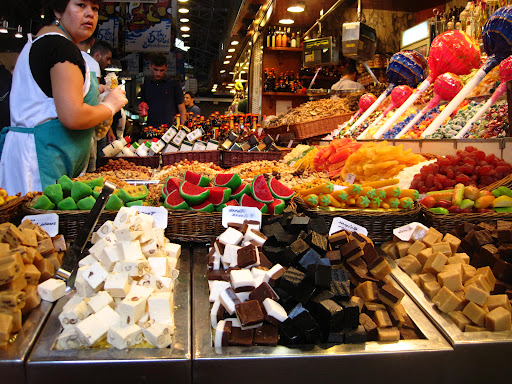
Candy booth at La Bouqueria, the Market, by Anthea.
 
 
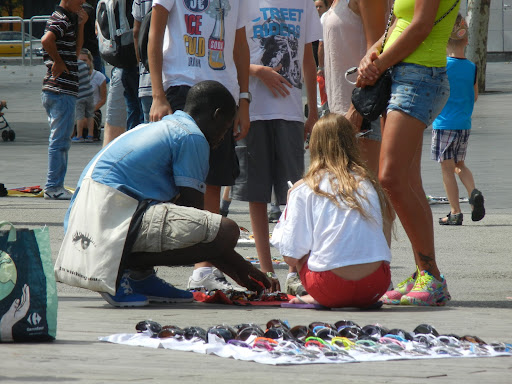
African street vendor at Port Vell on the Mediterranean. These guys sell knock-offs of designer sunglasses and purses, toys, jewelry and more. We saw lots of them in Athens. I don’t know if they are more legal here. In Athens, the police would tolerate them for a while, then make a sweep through to move them out. The goods for sale are laid out on a sheet that can be quickly pulled together and run away with, to move  to a different location. We saw very few in November, but this is prime tourist season now, and dozens of them had laid out their wares in the tourists’ paths near the beach.
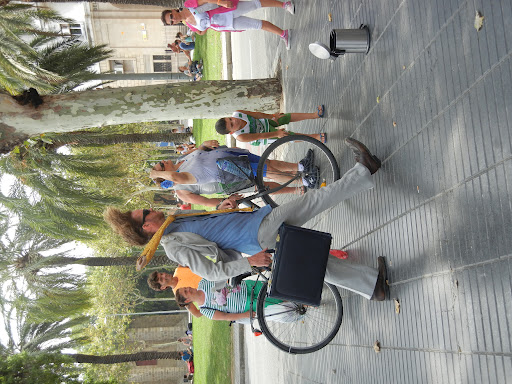
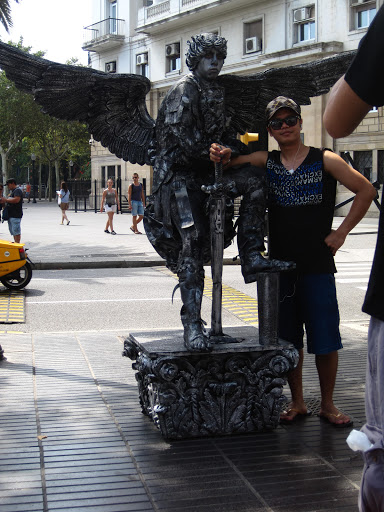
Street “statue,” Las Ramblas. There are a dozen or so people along Las Ramblas (the mile-long pedestrian stretch, a paved over river bed, that runs from Plaza Catalunya to the beach) who are dressed and painted as a clown, St. Michael the Archangel, an alien, a bronze cowboy, and a lady dressed as a blue surrealist painting with drawers extending from her skirt, and this guy who maintained this pose for minutes on end.
St, Michael the Archangel on Las Ramplas.
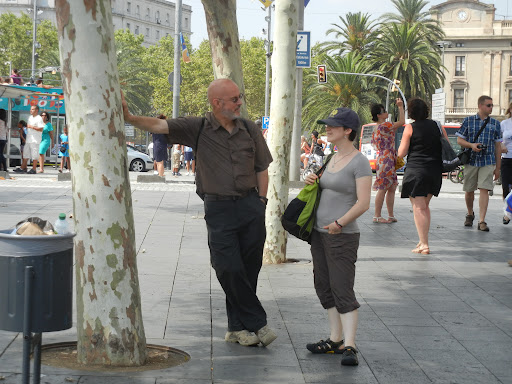
Jim and Anthea, unpainted, on a Barcelona street corner.
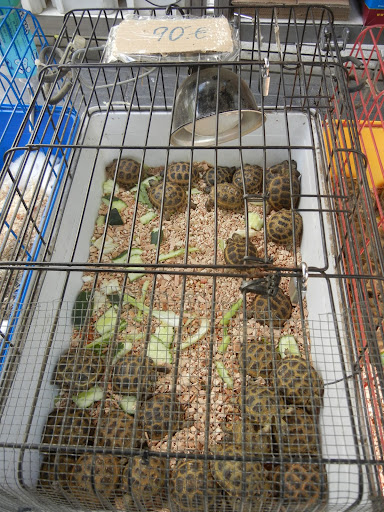
Turtles for sale on Las Ramblas — they are 90 euros each, so they must be special. The vendor also had rabbits, ducklings, chickens, hamsters, and more sizes and varieties of turtles.
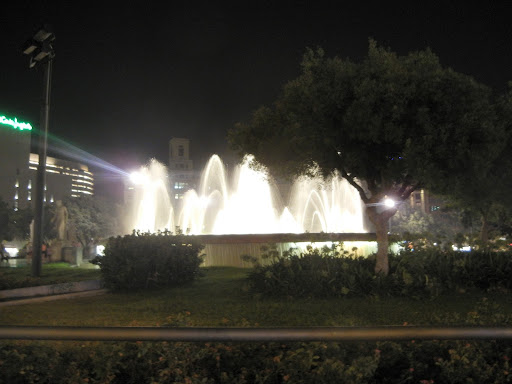
Night fountains at Plaza Catalunya.
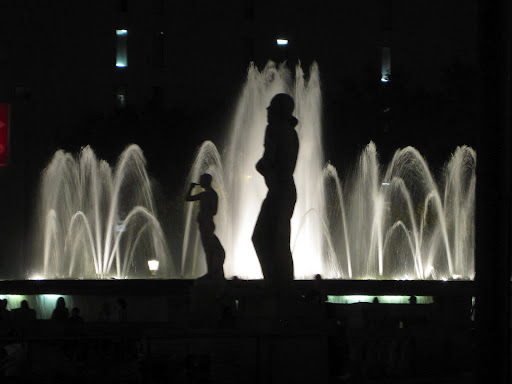
Fountains with figures (I don’t know whether these are people or statues — Anthea took the photo, and she’s asleep).
Posted in 2012, Camino de Santiago de Compostela, Camino de Santiago trip, travel | Tagged , , , | Leave a comment

Barcelona, August 23, 2012

This is the first of a series of emails that were sent to friends and family describing our recent trip to Spain to walk parts of the Camino de Santiago de Compostela. Jim, Anthea and I started in Anchorage on August 22, 2012 and arrived in Barcelona the next evening. These are copied directly from the emails, without alterations.

[For the record, it looks as if the author is “Chicken Lady,” another blog that I post on sometimes with my sister’s writings about her poultry farm. Really, it’s all Teri Carns.]

Hello all — We are at Hostal Central Barcelona — three floors up, not the room that we thought we reserved, and the power went out, just as we logged in and got connected. But we are at the Hostal Central in Barcelona, and we arrived here with relatively few delays and mishaps. It’s hot — 82 degrees, and since the power went out, so did the air conditioning. Luckily we have a small  balcony that opens out onto the street, so we might get a breeze if one comes up.

We do feel somewhat pilgrimesque, just leaving Anchorage. Regina very kindly came out to the Seattle airport to entertain us during our long layover there, bringing huckleberries that she and Deke picked last weekend on Mt. St. Helen. British Airways served us actual food for dinner and we got several hours of sleep before arriving at Heathrow for another long layover. There was no Internet available (at any price) so I wandered around the duty-free shops. It became apparent that one reason people were toting bags full of large bars of Toblerone was that most of the duty-free items only came in Costco-sized quantities. I managed to score a couple of small bars of chocolate to sustain us for the next leg of the trip to Barcelona, and a book to read.
This evening, after a somewhat lengthy discussion about the room we thought we reserved and the one we got (all very gracious) we set out to find dinner. A large crescent moon rode just above the plane (sycamore) and palm trees that line the streets. Everything seemed familiar, but we couldn’t find anyplace that we’d eaten before — I think this wasn’t a great neighborhood for restaurants. In the end, we went with a hole in the wall pizza place run by an Asian couple, eating an out-of-a-box pizza margarita, and toasting “Buen Camino” with Fanta and Diet Coke. It’s a start.
Tomorrow we’ll get SIM cards for Anthea’s and my phones, figure out the Saturday trains to Pamplona, and then see the sights — La Sagrada Familia (Gaudi’s master work cathedral), Las Ramblas (the pedestrian street, a paved-over river), La Bouqueria (the big market), Escriba (on Las Ramblas, the best chocolate shop), and the beach.
We are delighted to be here. Anthea and Jim are already long since asleep (it’s 11:15), and I will be soon. We’ll do better tomorrow, with photos and travel accounts. For now, Ultreya (means “onward,” a familiar Camino saying) –
Posted in 2012, Camino de Santiago de Compostela, travel | Tagged , , | Leave a comment

Foraging for a sourdough link: Faviken Magasinet to Alaska

Fireweed, Homer, Alaska

Lichens for dinner? Pine bark petit fours? Fireweed shoots and fiddlehead ferns? These appeared on the menu from Faviken Magasinet, as reported by FoodSnob blog, but could have been foraged from my backyard woods in the heart of Anchorage, Alaska which lies at nearly the same latitude as Jarpen, Sweden. Although no restaurant in Anchorage routinely serves lichens or fireweed shoots, many serve sourdough bread, also found at Magnus Nilsson’s “superlocavore” Faviken Magasinet.

The sourdough appeared in a description of a May meal prepared by Mr. Nilsson. Many of the courses offered — Wild Trouts Roe served in a Warm Crust of Dried Ducks Blood  for example, or pine bark petit fours for after dessert presented bits of nature that I don’t usually think of as edible. The methods of preparation were equally unfamiliar. Shavings of Old Sow and Wild Goose featured thinly-shaved pork from a sow that had been hanging to dry for two years, and slices of goose that were aged for nine months. Many of the other ingredients saw their beginnings in previous years — the “mature fermented mushroom juices from last year,” and the duck egg and sour milk liquors. Some dishes, particularly the scallops, were still alive when cooked at the table before the waiting diners, or, like the fireweed, had been foraged earlier the same day.Intriguingly, the sourdough bread was one of the few things served at the meal that would have been recognized and served without fanfare almost anywhere, especially Alaska. Made with 200-year-old sourdough from the chef’s grandmother, flour from wheat grown nearby, and the grandmother’s kneading trough, the end result was more about tradition than about emphasizing creative and minimalist presentations.  “Bröd och smörTove’s Bread and the Very Good Butter. As the bread was brought out, an old kneading trough was shown off. It was served with a story. This was the same tray that once belonged to Magnus Nilsson’s grandmother and her grandmother before her; it still harbours traces of the same sourdough culture she used – now over two hundred years old. The family connection does not end there: with this ancestral starter, flour from Järna near Stockholm and from an island in lake Storsjön processed together at a mill in Östersund, he uses his wife’s recipe to bake a pain au levain loaf that possessed a thin yet crunchy crust and dense, dark yet moist and fluffy crumb. It was simply excellent. The very good butter (its official name here), from close by Oviken and with a texture like melting cheddar, was superb too.” [from the Food Snob blog review]

The degree of focus on terroir — “the sum of the effects that the local environment has had” on the taste and qualities of a food, and attention to preparation of food found at Farviken Magasinet might seem limiting to most Alaskans, even those who work with the same principles of eating local foods. Kirsten Dixon, one of the state’s better known chefs (she recently appeared on the Today show) and cookbook authors creates with foods found in Alaska, but happily combines raw seaweed pulled from the Tutka Bay beach with flax seed, sun-dried tomatoes, lemon juice and cayenne pepper into sea crackers that have their roots in half a dozen different climates.

From her perspective, Alaskan cuisine is based in the many cultures that have left their mark on Alaska — the Alaskan Native peoples, the Russians, Asians, and the gold miners. She sees sourdough as representative of “hearty and determined pioneers.” Swedish cuisine as re-imagined by Mr. Nilsson with his innovations at Farviken Magasinet draws on local ingredients and techniques that have been used for generations within that one country, including his grandmother’s sourdough. And thus the sourdough bread that links the two cuisines is just as at home in the Alaskan repetoire as it is in Jarpen.

Republished from http://wheatwanderings.blogspot.com/2011/10/foraging-for-sourdough-link.html.

Posted in Food journeys, Uncategorized | Tagged , , , , , , , , | 2 Comments

Barcelona Bakeries

   Barcelona is noted for chocolate, the 1992 Summer Olympics (and for wanting to be a contender for the Winter Olympics a few years hence; it is building an indoor ski resort, harvesting the cold from the transport of liquified natural gas to make the snow), and Gaudi’s buildings variously described as hallucinogenic, bizarre, and world treasures. It also has one of the world’s great street markets all along Las Ramblas, and bakeries everywhere. Our November 2011 two weeks there had more than its fair share of rain, but plenty of chances to sample breads and pastries that could hold their own compared to  any place in Europe.

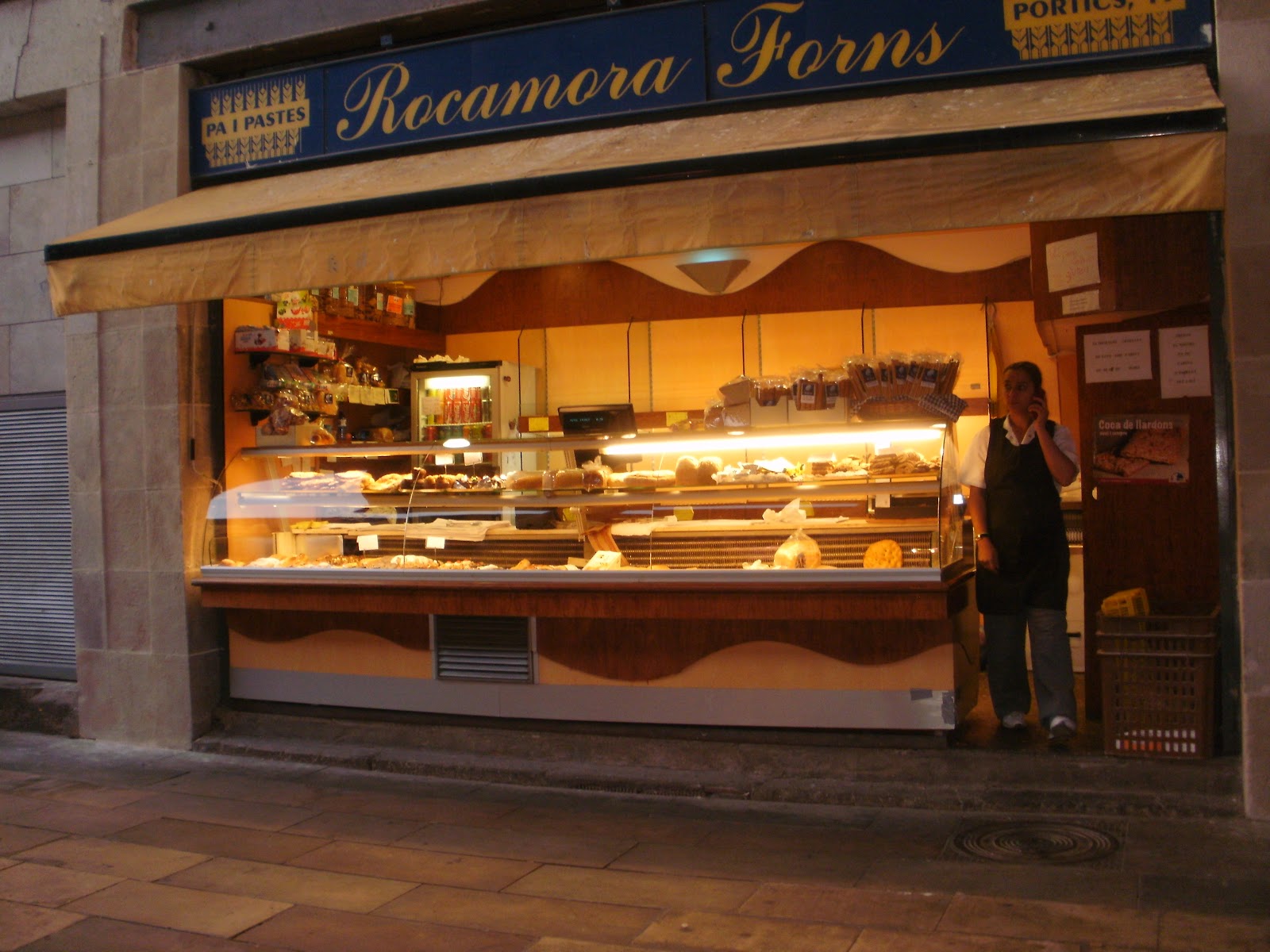
My favorites were whole wheat croissants topped with toasted sesame seeds sold from Rocamora Forns, a small shop across the narrow alley from the St. Josep Market. We often were there too late to buy any — I wasn’t the only one in Barcelona who loved them. Many of the regular croissants were finished off with a sweet glaze, not to my taste. The breads were delicious too, and came in a full range from seed-chocked health foods to delicate white breads with thin crackling brown crusts.The “peasant bread,” “pan de tomate,” was made with a ciabatta-like white bread, sliced thin and sometimes toasted. First, it’s rubbed with a cut clove of garlic, then with a halved tomato, so that some of the pulp is left on the rough surface, and finally drizzled with olive oil. With luck, and a good enough restaurant, the waiter brings the makings, prepares the first slice before you as an example, and then leaves you to do the rubbing and drizzling yourself for the remainder. You get to do all of the eating, too. It was one of the best things in any bar or cafe, and also one of the cheapest.

Here are photos:

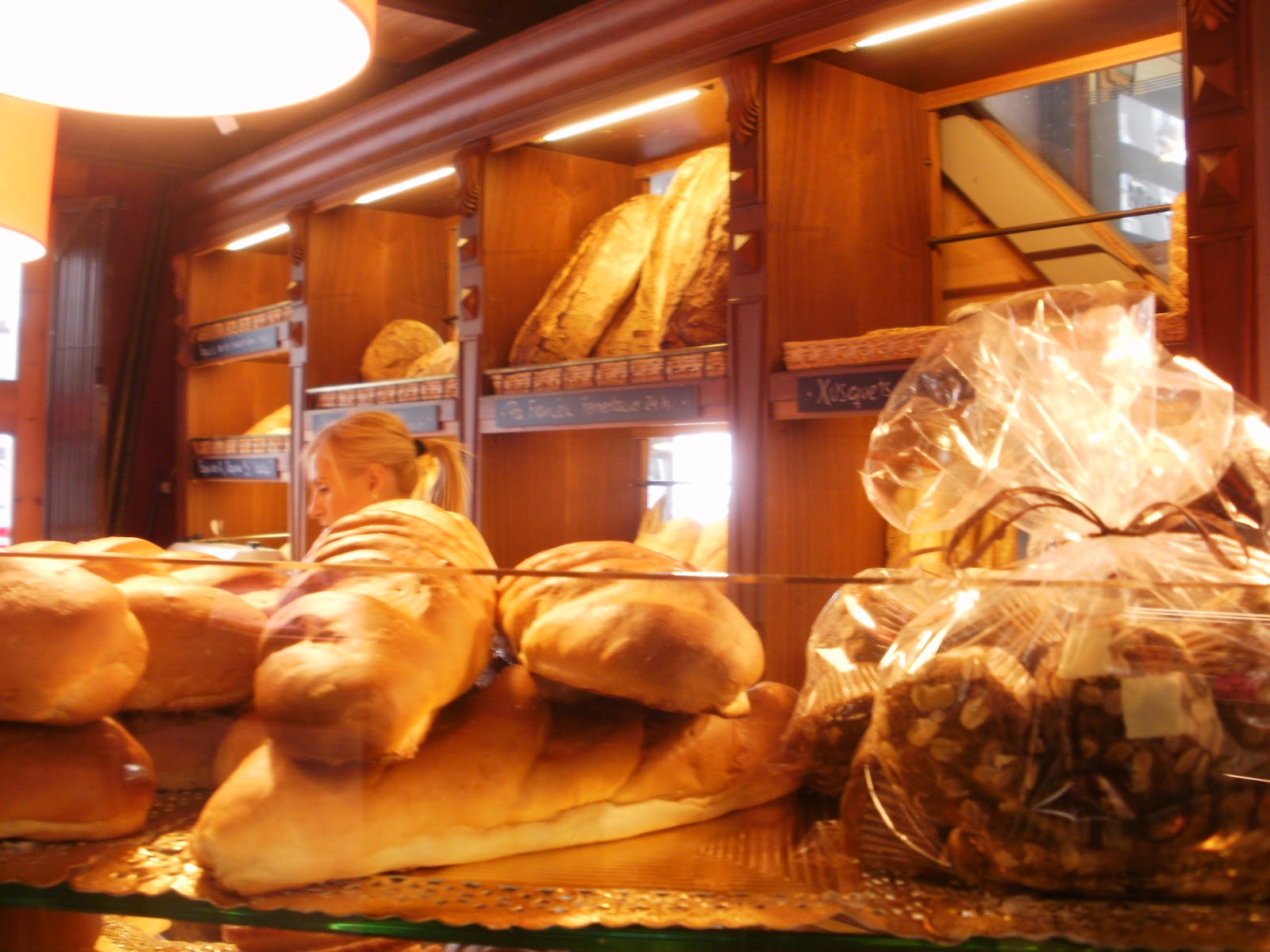
Barcelona bakery.

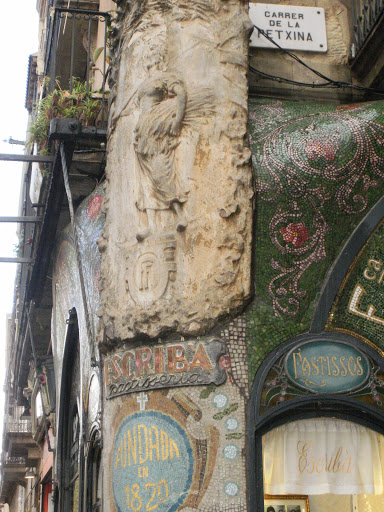
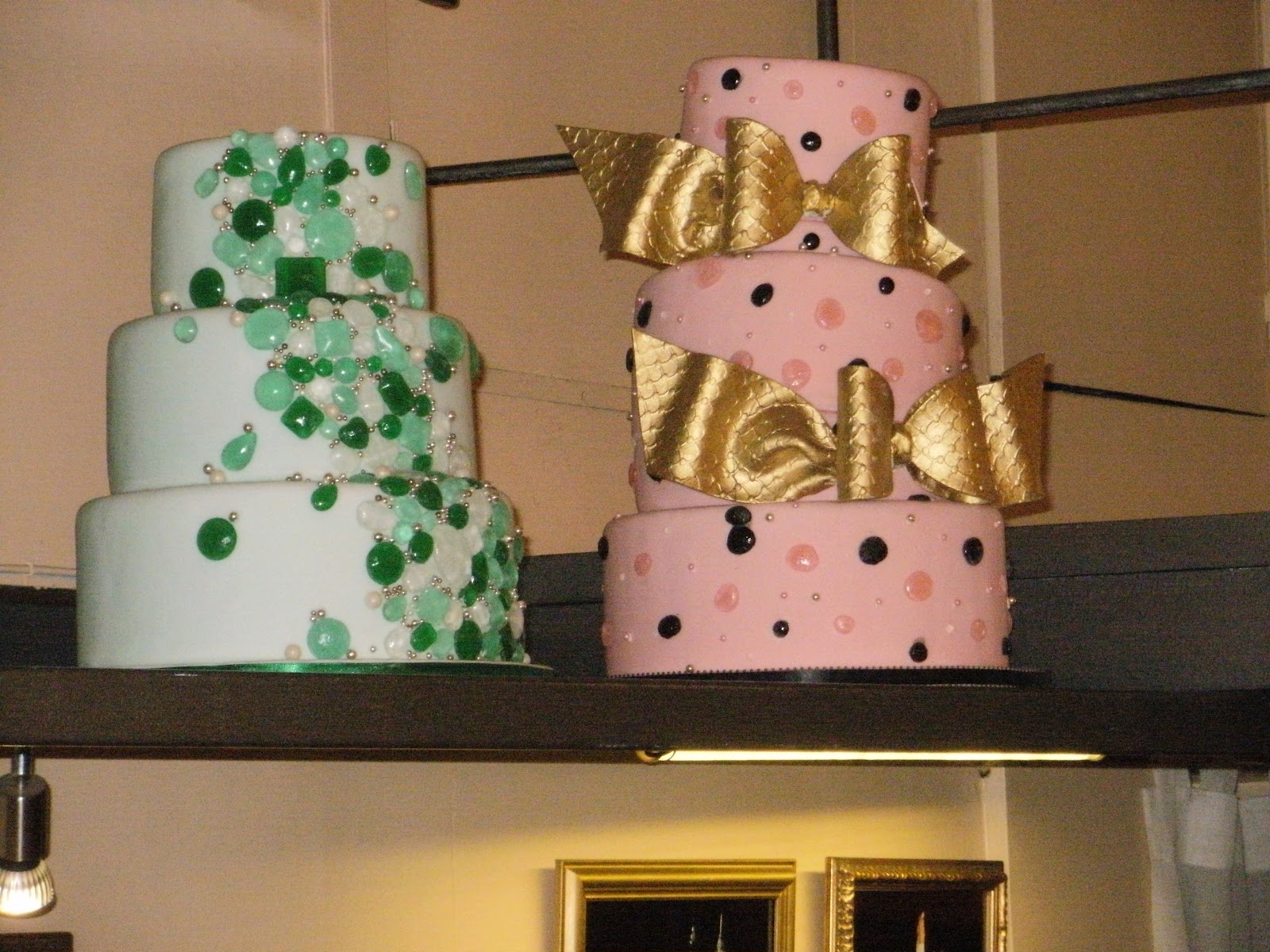
Escriba pastry shop on Las Ramblas, famous for its decorated cakes.
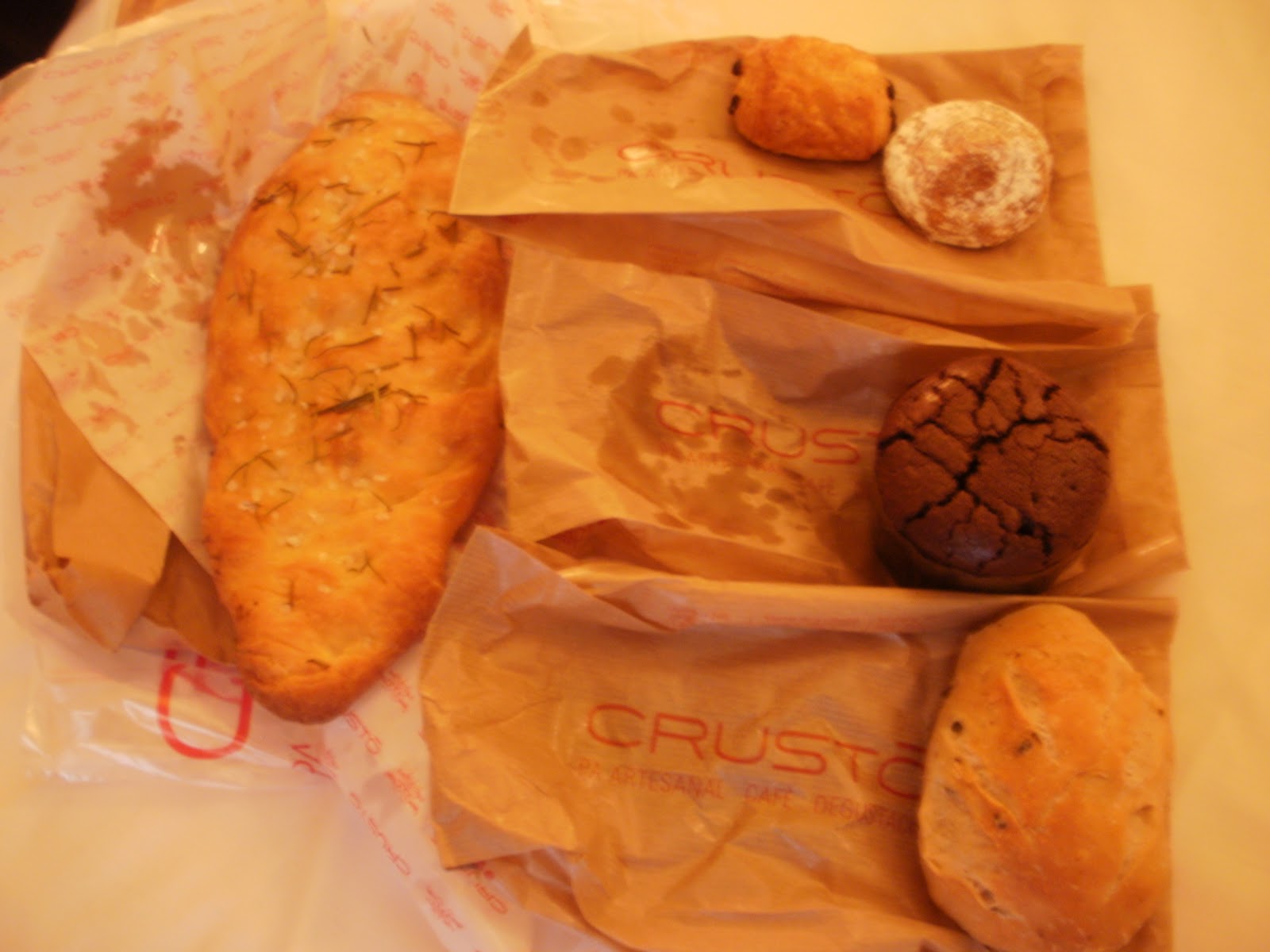
A day’s haul — cookies, a min-chocolate croissant,a roll to eat with butter and cheese.
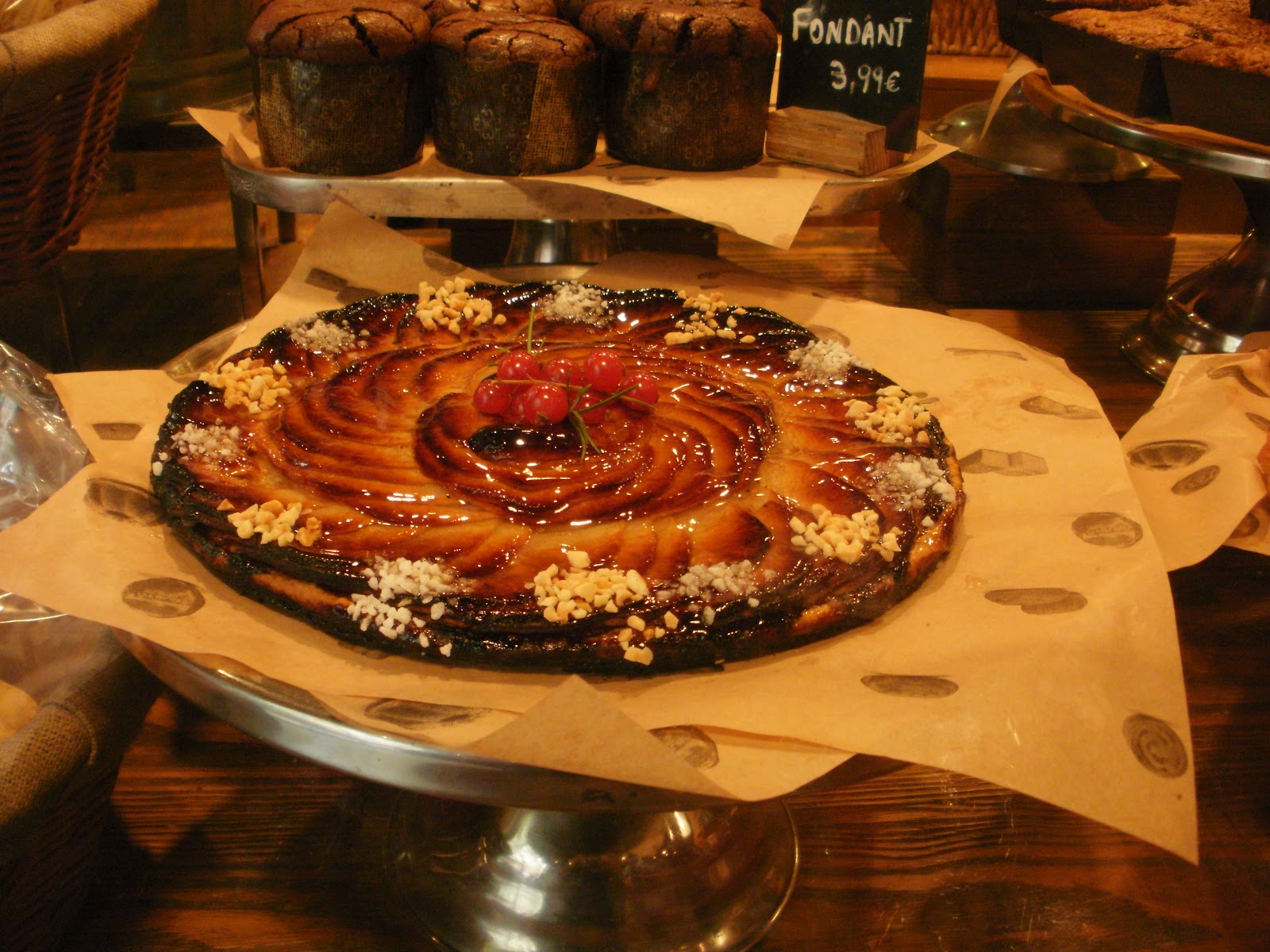
A fruit tart, glazed, and centered with cherries.

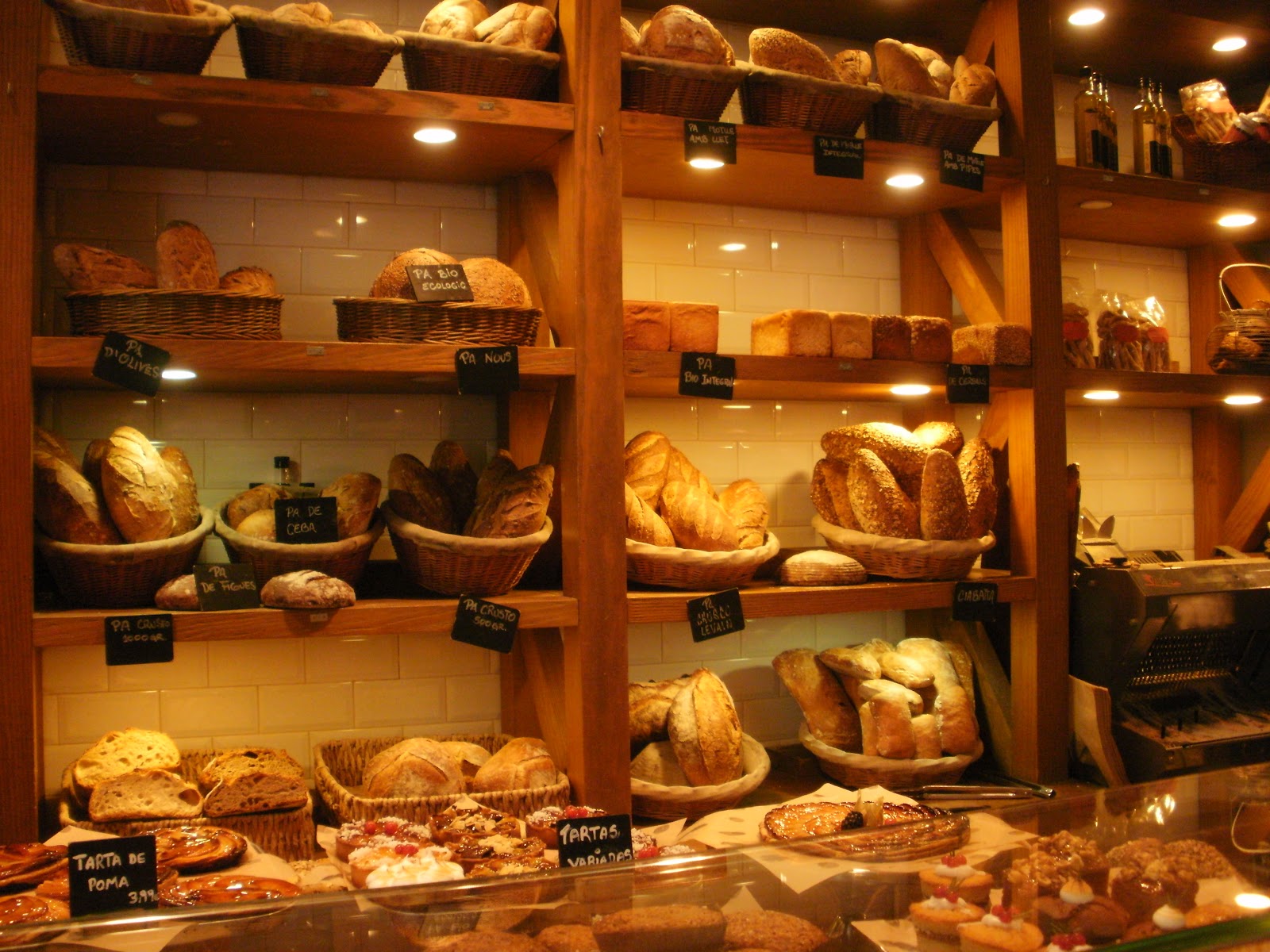
Barcelona bakery, with a variety of naturally yeasted breads.

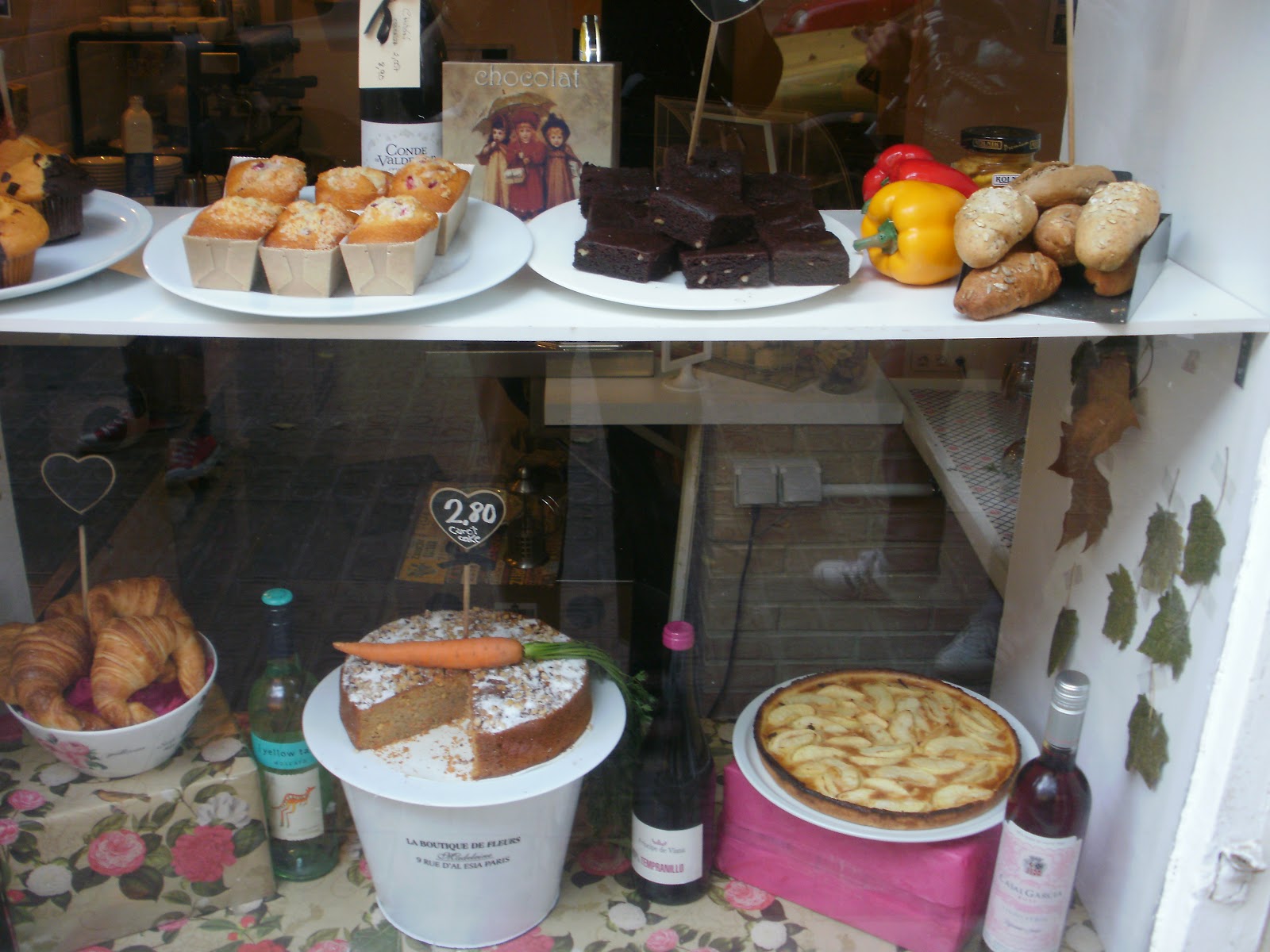
Presentation is all: a carrot cake; brownies, up by the peppers and potatoes on the top shelf, croissants at the lower left in a flower pot. Pastry shop in L’Eixample.

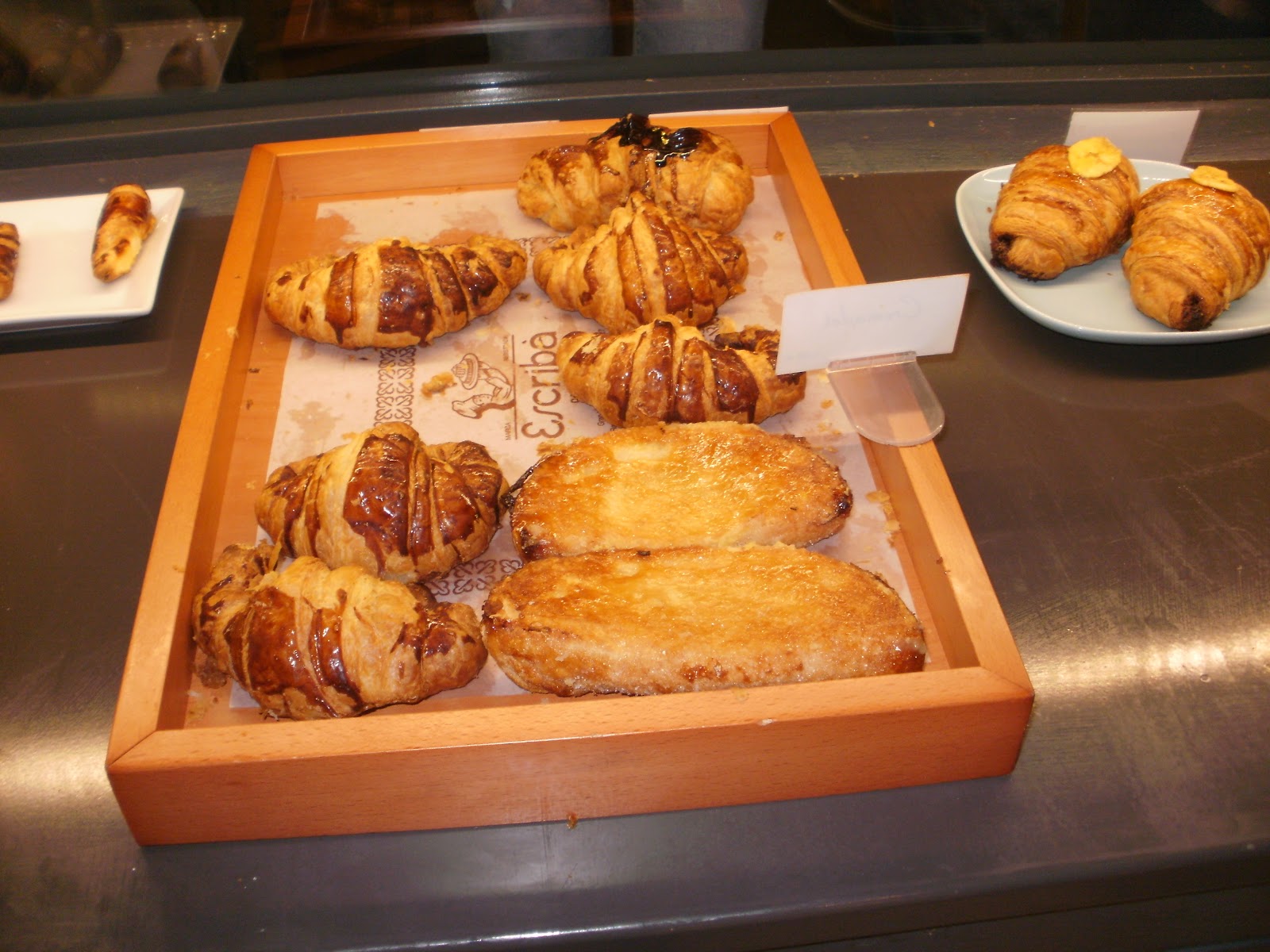
Escriba pastries — plain croissants, filled croissants, something like palmiers.

The pastry shop in the St. Josep Market off Las Ramblas, that is home to the whole wheat croissants.

The Art Noveau (Modernisme) Wheat Goddess outside Escriba.


Re-published from http://wheatwanderings.blogspot.com/2012/02/barcelona-bakeries.html

Posted in Food journeys, travel, Uncategorized | Tagged , , , , , | 1 Comment

London Breads Around the Town


      London had as many delicious breads as Barcelona, although the settings were not as elegantly Art Noveau (in Spain, called “Modernisme”). Here are a few:

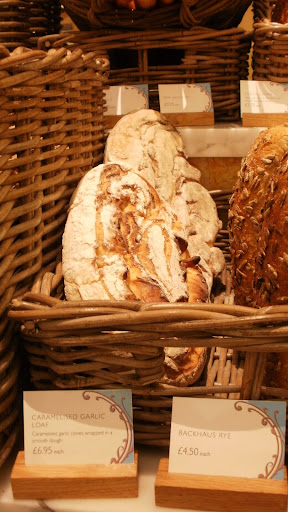
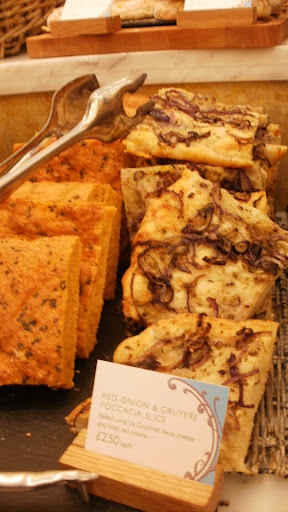
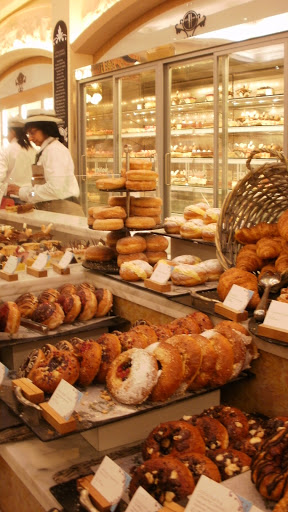
These first three are from the Food Halls at Harrod’s.


Foccacia at Harrod’s.
 

Breads and pastries in the Harrod’s Food Halls.
 

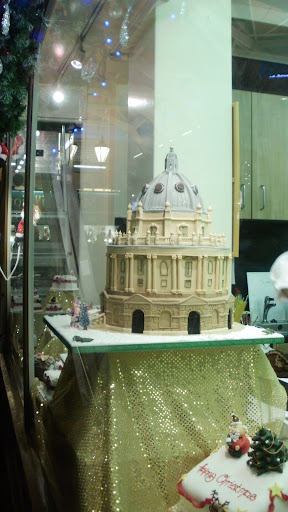
A cake in a pastry shop in the Covered Market in Oxford.
 

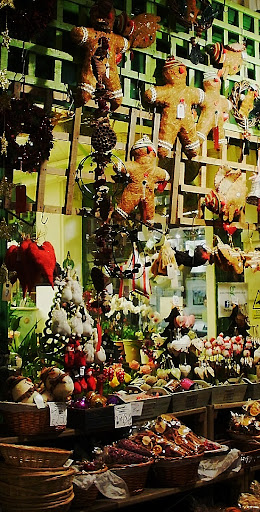
Giant gingerbread men, cookies and kitsch at the Oxford Covered Market.
 

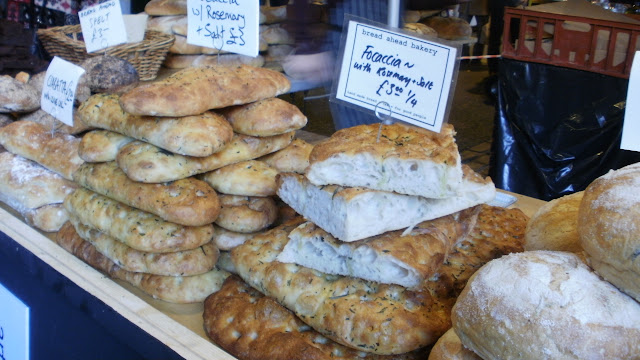
Naturally yeasted breads at the Borough Market, Southwark, London.


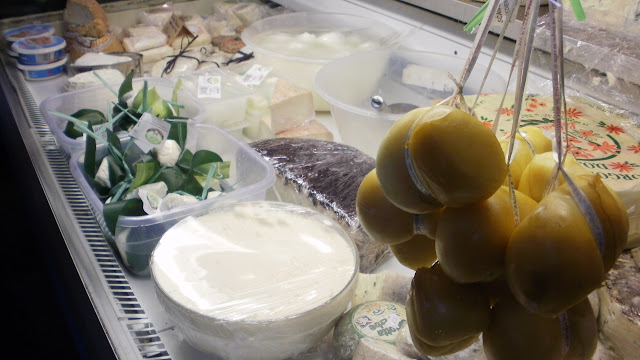
Cheeses at the Borough Market, to go with your bread.

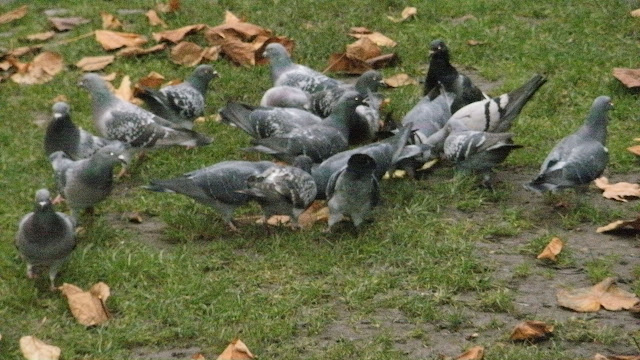
Pigeons near the Borough Market, eager for some bread crumbs.

re-posted from http://wheatwanderings.blogspot.com/2012/02/london-breads-around-town.html

Posted in Uncategorized | Tagged , , , , , , , | 1 Comment